
Table of Contents
- Why Bagger Riders Look Beyond Twin Power USA
- Harley-Davidson Steering Damper Solutions for Stability
- Harley Bagger Aftermarket Parts: What Category Matters Most
- Motorcycle Chain Tensioner Technology and Performance
- Bagger Handling Upgrades: Suspension and Control
- Fitment, Compatibility, and Installation Considerations
- Price, Warranty, and Value Comparison
- Which Upgrade Should You Choose First?
- Frequently Asked Questions
Last Updated: October 14, 2026
Why Bagger Riders Look Beyond Twin Power USA
After investing in a performance bagger, big-bore kit, tuning, upgraded suspension, the last thing you want is high-speed instability. That's where the search for twin power alternatives baggers need begins. Riders upgrading Harley-Davidson Road Glide, Street Glide, or CVO Touring models find stock steering dampers and chain control solutions don't match their builds.
More horsepower exposes weaknesses in factory steering and drivetrain control: a stock damper fine at 80 horsepower becomes inadequate at 120, and a loose chain at highway speeds is dangerous. This guide from Death Deleter covers the real alternatives to Twin Power serious bagger riders choose, plus steering damper solutions, aftermarket parts by category, fitment, and how to evaluate options for your build.

Harley-Davidson Steering Damper Solutions for Stability
How Steering Dampers Eliminate High-Speed Wobble
A steering damper resists rapid steering movement by absorbing oscillation energy.
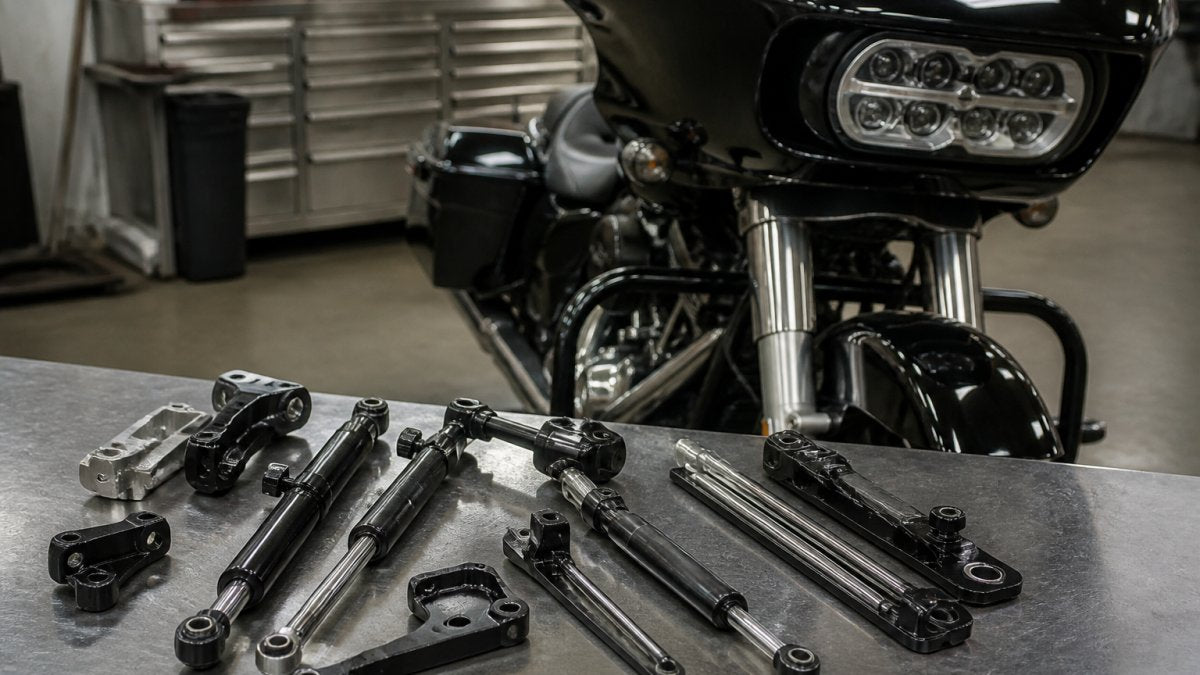
The difference between stock and performance-grade comes down to adjustability and build quality. High-performance dampers like the YSS units in Death Deleter kits are fully adjustable and rebuildable, so you dial in damping to match your fork setup, tire pressure, and riding style.
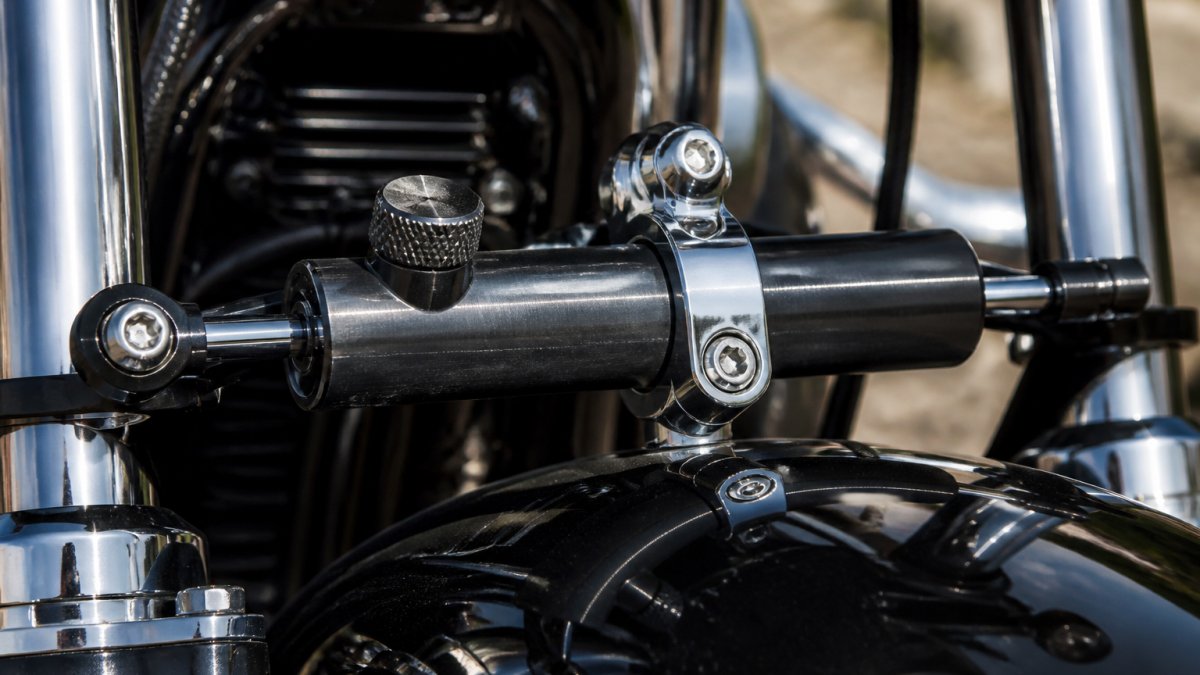
For performance baggers, this adjustability matters. A rider on inverted forks (CVO models or custom Öhlins setups) needs different damping than one on standard forks.
Adjustable vs. Fixed Damping: What Bagger Riders Need
Fixed dampers apply constant resistance, simple, cheap, adequate for stock bikes, but they can't adapt: upgrade tires, adjust air pressure, or add weight, and a fixed damper becomes too soft or too stiff.
Adjustable dampers let you tune resistance on the fly: more damping stiffens response and resists oscillation, less allows quicker input for carving corners.
Harley Bagger Aftermarket Parts: What Category Matters Most
Choosing among twin power alternatives baggers require is not one product, it is a decision you make separately in each category. Twin Power USA is best known for batteries, electrical components, gaskets, seals, and service parts, so shop alternatives by breaking your bagger down by system and picking a supplier per category.
Batteries and Electrical Components
This is where Twin Power is most often the incumbent, so alternatives matter most.
Check three things: cold-cranking amps against your engine's displacement and compression, case dimensions and terminal orientation against your battery box, and warranty term. Budget batteries often quote impressive cranking numbers but carry 6- to 12-month warranties; premium AGM units carry 24 months or more.
Engine, Cam Chain, and Tensioner Components
On high-mileage Twin Cam and Milwaukee-Eight baggers, cam chain tensioner wear is a known maintenance item, and aftermarket alternatives frequently outperform the factory part.
Evaluate the tensioner shoe material (composite versus nylon), whether the kit includes new chains and bearings, and whether the manufacturer publishes a service interval. A tensioner that saves money up front but needs the same labor again in 20,000 miles is not a value.
Exhaust Systems
Exhaust is the biggest styling and sound decision on a bagger, and where fitment mistakes are most expensive. Variables are header diameter (affects flow and where power moves in the RPM range), muffler design (baffled versus straight-through), and slip-on versus full system.
Compare material (mild steel with chrome versus stainless versus titanium), heat-shield coverage, and published dyno results. Any exhaust change on a fuel-injected bagger should be paired with a tuner or flash to avoid a lean condition.
Suspension and Handling
Suspension is where a bagger's weight works against it. Stock rear shocks on many touring models are under-sprung for two-up riding with luggage.
Evaluate spring rate adjustability, damping adjustability, and whether the manufacturer offers model-specific valving rather than a one-size-fits-all rate. A shock not valved for a 900-pound touring bike will ride worse than stock.
Floorboards, Pegs, and Controls
These are the most common cosmetic upgrades, but also ergonomic decisions. Compare material (6061-T6 aluminum versus cast aluminum versus steel), whether mounting hardware is model-specific or universal, and finish (anodized, powder-coated, or chrome). Anodized resists corrosion but can fade with UV; chrome is durable but heavier and pricier to repair.
Brakes and Drivetrain
Brake upgrades usually mean larger rotors, upgraded pads, or a full caliper swap. Compare rotor material (stainless versus iron), pad compound (organic, sintered, or ceramic), and whether the kit requires a new master cylinder. In the drivetrain, chain and belt conversions, sprockets, and clutch components round out the category, where a chain tensioner or automatic adjuster earns its place.
How to Compare Any Two Alternatives
Run every candidate through the same five questions: Does it fit my exact model year and platform? What is the warranty term and what does it cover? Is the manufacturer's origin and testing documented? What is the total installed cost, including supporting parts? And if it fails, is there a rebuild path or is it disposable?
Motorcycle Chain Tensioner Technology and Performance
A chain tensioner is a simple device solving a complex problem. As chain links wear, spacing increases, sprockets mesh less efficiently, and power transfer becomes rough. Manual adjusters require frequent tweaking, every 500 miles on a performance bike.
Death Deleter Harley-Davidson Road Glide & CVO Steering Stabilizer 2015–2026 →
Automatic tensioners use spring pressure to maintain consistent slack. As the chain stretches, the tensioner shoe moves outward, keeping tension constant with no adjustment required.
Bagger Handling Upgrades: Suspension and Control
Handling upgrades extend beyond steering dampers. Suspension geometry, tire selection, and weight distribution all influence how a bagger behaves at speed.
For most riders, steering stabilization comes first, wobble is the symptom that forces the upgrade. Then suspension tuning becomes relevant: baggers benefit from stiffer spring rates and valving tuned for the bike's weight, and inverted forks (common on CVO models) offer better bottoming resistance.
Fitment, Compatibility, and Installation Considerations
Fitment is where most bagger upgrade projects go wrong. "Harley-Davidson Touring" is not one platform, it is several generations with different frames, fork diameters, suspension geometry, and electrical architecture. A part that fits a 2014 Street Glide may not fit a 2024 Street Glide.

Know Your Platform Generation First
Before comparing any alternative, identify your bike's generation. The Touring family's major break points are the frame change in the late 2000s, the Rushmore update in the mid-2010s, the Milwaukee-Eight introduction in 2017, and the 2024 refresh. Within each era, fork diameter, triple-tree spacing, and mounting points can differ between standard models and CVO or Screamin' Eagle variants.
Build a Fitment Check Before You Buy
For any alternative part, run this checklist:
- Model year range: Does the listing state an explicit year range, or does it say "fits most Touring models"? Vague language is a red flag.
- Platform or chassis code: Does the manufacturer reference the specific generation rather than the marketing name?
- Fork diameter and triple-tree spacing: Critical for steering dampers, fork springs, and cartridge kits. Measure your own fork tube rather than assuming.
A Model-Year and Platform Fitment Framework
Rather than a single universal table, use this framework to organize your own research. Group your bike by generation, then note the shared and unique attributes:
| Attribute to Verify | Why It Matters | Where to Confirm It |
|---|---|---|
| Generation / chassis era | Determines frame, suspension, and bodywork compatibility | VIN decode and manufacturer parts catalog |
| Engine family | Affects exhaust, intake, tuner, and cam components | VIN decode and engine code |
| Fork type and diameter | Determines damper, spring, and cartridge fitment | Physical measurement of fork tube |
| Rear suspension type | Determines shock and spring options | Model spec sheet |
| Electrical system type | Determines battery and accessory compatibility | Owner's manual and wiring diagram |
Installation: What You Can Do Yourself and What You Cannot
Most bolt-on categories, batteries, floorboards, slip-on exhausts, and many steering damper kits, are within reach of a home mechanic with basic hand tools if the mounting hardware is model-specific. Suspension revalving, full exhaust systems needing a tune, and CAN-bus electrical work typically require a shop. With application-specific hardware, installation means removing the stock component, transferring reusable fasteners, and torquing to spec; with only universal hardware, expect to source spacers, shims, or brackets yourself.
The Cost of Getting Fitment Wrong
A part that doesn't fit means shipping both ways, downtime during riding season, and sometimes a restocking fee. A mis-fit exhaust can leak at the flange, a mis-fit damper can bind the steering, and a mis-fit battery can fail to crank on a cold morning. Verifying fitment before purchase is the cheapest insurance in the build.
Price, Warranty, and Value Comparison
Performance upgrades require budget allocation. Understanding what you're paying for prevents overspending on features you don't need.
The value calculation is prevention cost versus failure cost: a chain failure means new chain, sprockets, and potential frame/swingarm damage, easily exceeding $1,500.
Warranty coverage varies by manufacturer. Death Deleter products include a standard manufacturer warranty covering defects in materials and workmanship; check specific product listings for terms.
Which Upgrade Should You Choose First?
If you're experiencing high-speed wobble, steering stabilization is priority one, wobble is a symptom of inadequate damping. Fix it first, then assess other handling needs. If your chain is loose or slipping, a tensioner is the immediate upgrade; drivetrain safety comes before aesthetics.
For performance builds with increased horsepower, both upgrades work together: the damper stabilizes steering while the tensioner keeps chain tension consistent. Neither compensates for the other.
The Death Deleter Road Glide steering stabilizer and Street Glide steering stabilizer kits provide the foundation for handling control. Both integrate YSS dampers with application-specific mounting, delivering the precision adjustment serious bagger riders need. Shop Death Deleter steering stabilizers and experience the difference adjustable damping makes at speed.
Frequently Asked Questions
What does a steering damper actually do on a high-performance bagger?
A steering damper resists rapid steering movement by creating hydraulic resistance in the steering column. On baggers with performance upgrades like big-bore kits, increased horsepower amplifies steering input at highway speeds, causing oscillation or 'death wobble.' An adjustable damper like the YSS units found in quality aftermarket setups absorbs this energy, keeping the front wheel stable without making the bike feel sluggish in corners. Riders typically feel the difference immediately at 80+ mph.
How do I know if a steering damper will fit my specific Harley model?
Fitment depends on three factors: fork tube diameter (49-62 mm on most modern Harleys), fork type (standard or inverted), and model year. The Death Deleter Road Glide and Street Glide kits, for example, accommodate 2015-2026 models with included shims that adapt to different fork sizes. Always verify your fork diameter and suspension type before ordering. Most quality aftermarket dampers include multiple shim sizes or adjustable mounting brackets to handle this variation.
Should I upgrade my steering damper or chain tensioner first?
Start with steering stability if you experience high-speed wobble or instability. A steering damper addresses immediate safety at speed. Add a chain tensioner next if you've upgraded your engine or notice chain slack developing during acceleration. Both work independently, but installing them together creates a complete control package. For weekend riders on stock baggers, a damper alone usually solves the problem. Track-focused builds benefit from both.
Will aftermarket steering and chain-control parts void my Harley warranty?
Harley-Davidson's warranty typically covers factory components and defects. Aftermarket steering dampers and chain tensioners don't void the entire warranty, but Harley may deny claims on steering or driveline issues if they determine the aftermarket part caused the damage. Check your warranty documents or contact your dealer before installation. Quality manufacturers like Death Deleter stand behind their products with their own warranties, providing a safety net if issues arise.
High-speed instability on a performance bagger isn't something you learn to live with, it's a problem you solve. The right steering damper and chain tensioning system eliminate wobble, maintain drivetrain safety, and let you ride with confidence. Death Deleter's YSS-integrated kits, adjustable damping, and application-specific mounting deliver the control performance builds demand. Get started with Death Deleter and ride the stability your bike deserves.