
Quick Summary
A steering damper resists rapid turning of the front wheel, while improved steering stability at speed comes from the whole bike's geometry, tires and suspension setup. A damper calms sudden steering movement, but it cannot fix a chassis that feels unstable on its own. It also does not protect engine components, since steering loads never reach the powertrain.
- A steering damper controls how quickly the handlebars can move, not how far they turn.
- Damping force scales with steering velocity; stability scales with road speed and chassis geometry.
- Do not stiffen the damper to hide instability after a tire change, fork service or luggage load.
- Steering damper loads travel through the front end, not the engine, transmission or motor mounts.
- Inspect steering head bearings, axle torque and tire pressure before assuming the damper is the fix.
Table of Contents
- What a Steering Damper Does on a Harley-Davidson Touring Bike
- Rapid Input Resistance Versus Speed-Based Steering Stability
- Does Steering Resistance Protect Engine Components?
- Damper, Steering Assist, or Electronic Stability Control: How They Differ
- Motorcycle Head Shake Causes Beyond the Damper
- Adjustable Steering Damper Settings and When Heavier Feel Signals a Fault
- Choosing a Steering Stabilizer for Your Harley-Davidson Road Glide
- Frequently Asked Questions
What a Steering Damper Does on a Harley-Davidson Touring Bike
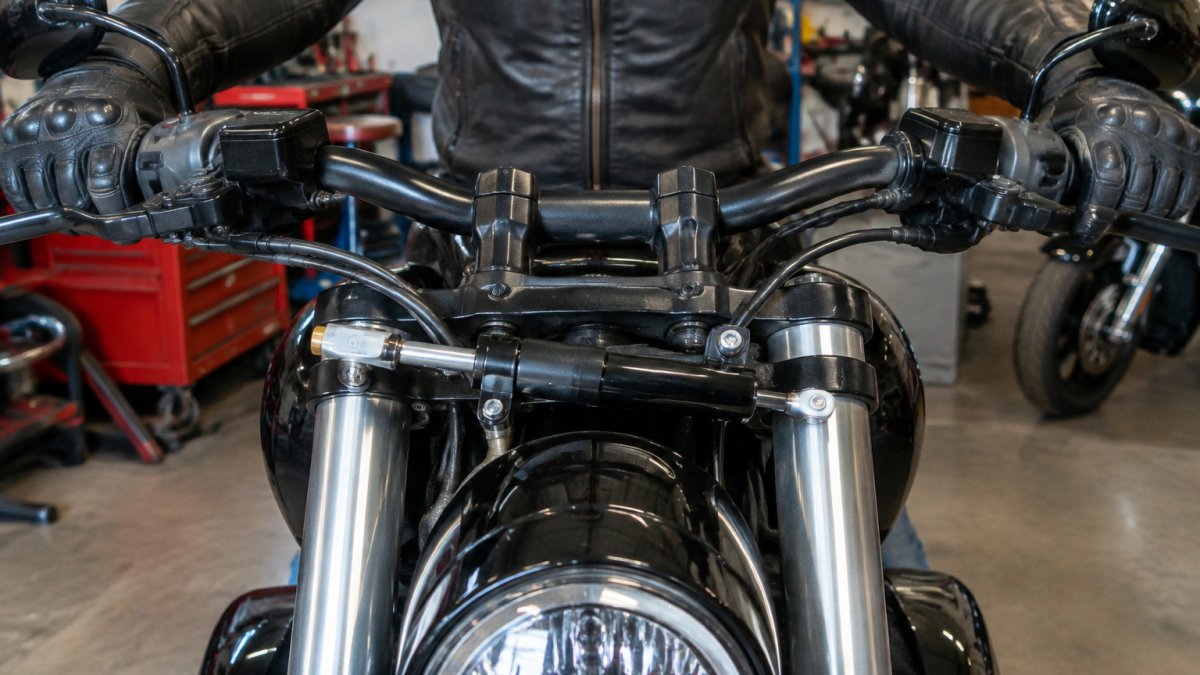
A steering damper is a hydraulic device that resists rapid turning of the front wheel. Read the buyer's guide to steering dampers for what to look for before you choose one. On a Harley-Davidson Road Glide or Street Glide, it sits between the frame and the fork tubes and absorbs sudden steering input. Most riders who install one are chasing stability at highway speed, not better cornering.
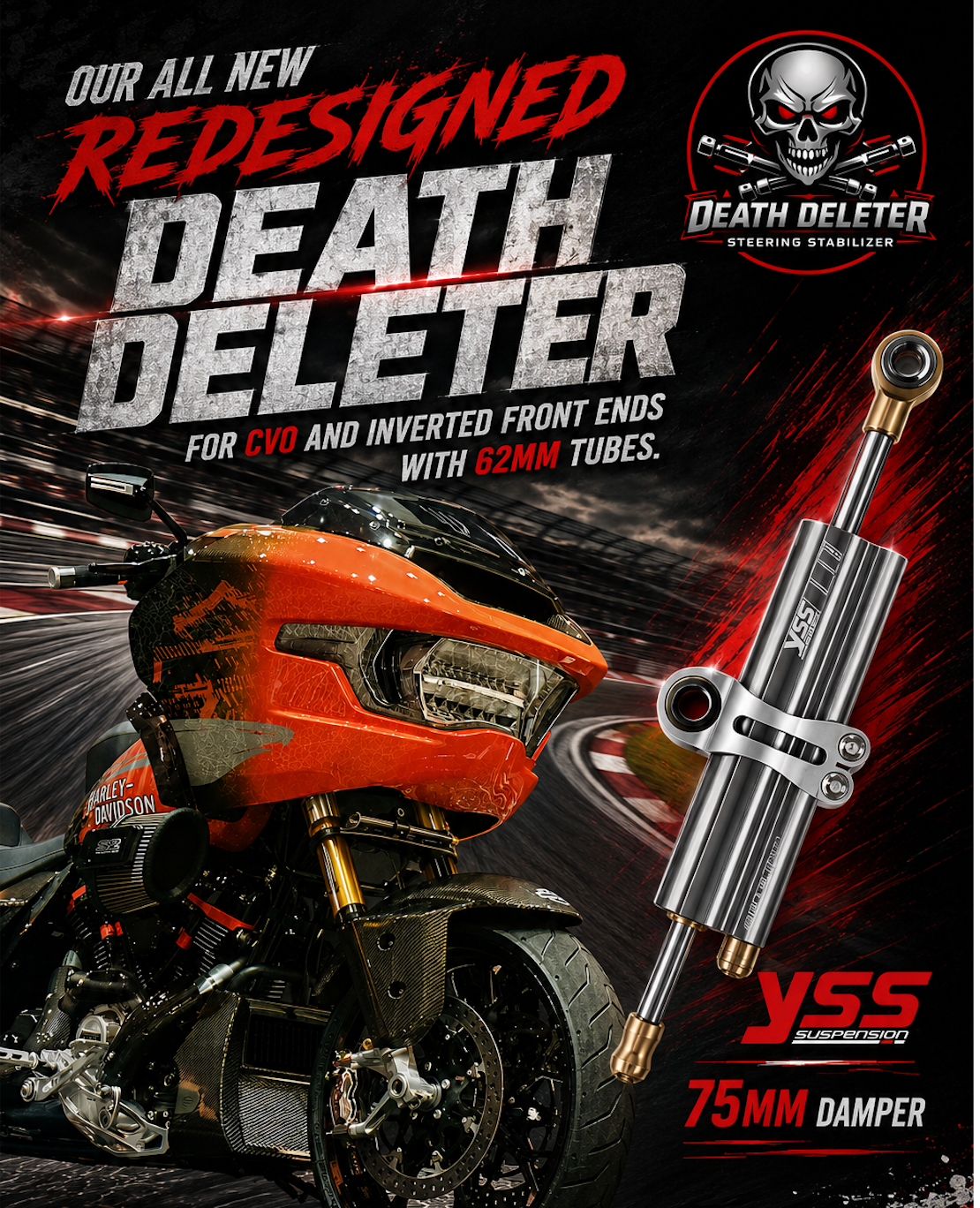
The Death Deleter Road Glide & CVO Steering Stabilizer (2015-2026) pairs a black YSS damper with mounting brackets in Gold, Black, or Clear Anodized finishes. The kit is priced at $675. See the Road Glide and CVO steering stabilizer kit for fitment details and bracket finish options. The YSS damper is fully adjustable and rebuildable.
Keep expectations realistic. A damper controls how quickly the handlebars can move. It does not fix a worn steering head bearing, a bent triple tree or mismatched tires. Those problems need inspection first, and a damper alone will not hide them.
Rapid Input Resistance Versus Speed-Based Steering Stability
These two ideas get confused constantly, so it helps to separate them at the mechanism level. Rapid input resistance is a property of the damper: it produces force proportional to how fast the steering moves, not how far it moves. Push the bars slowly and the damper barely registers; snap them sideways and the internal valving forces hydraulic fluid through a restricted orifice, generating resistance that rises with steering velocity. That is why a damper calms a sudden front-end kick from a pothole or a tank-slapper without making ordinary cornering feel heavy.
Speed-based steering stability is a different animal. It is a property of the whole machine, steering-head angle, trail, wheelbase, tire profile, swingarm pivot, and weight distribution, and it describes how willingly the bike tracks straight and returns to center as speed rises. A damper contributes to that stability by damping oscillation, but it cannot create stability the chassis does not have. A touring bike with worn steering-head bearings and a misaligned rear wheel will still feel nervous with the damper cranked to full stiff.
The practical distinction shows up in what each system changes. Damping force scales with steering velocity; stability scales with road speed and geometry. Speed-sensitive power steering, common on cars and some touring motorcycles, is a third thing entirely: it varies assist effort according to vehicle speed, light at parking-lot speeds and heavier at highway speeds, so the driver or rider gets easy low-speed maneuverability and confident high-speed feel from the same system. A damper does not do that. It resists fast movement at any speed, which is why a badly adjusted damper can feel vague in tight, low-speed turns even though it is helping at 75 mph.
A useful way to test which effect you are feeling: ride the same stretch of road before and after installation, and separate the two sensations. If the change is in how the bars move under your hands, sharper jolts are muted, the front end settles faster after a bump, you are feeling the damper. If the change is in how the bike tracks overall, it holds a line with less correction, feels less twitchy at speed, you are feeling the interaction between damping and chassis geometry. Most riders feel both, but knowing which is which keeps you from chasing a geometry problem with a damper adjustment.
Watch out: do not use a stiffer damper setting to compensate for a bike that feels unstable at speed. If the instability appeared after a tire change, a fork service, or a luggage load, the cause is almost certainly geometry, tire pressure, or suspension setup, and extra damping will mask the symptom while leaving the underlying fault in place. Before increasing damping, correct the underlying setup, since critical damping for motorcycle suspension is a balance rather than a cure for faults in geometry, tire pressure, or load.
Does Steering Resistance Protect Engine Components?
Steering resistance acts on the front end, the fork tubes, triple tree, steering head, and front wheel, and the loads it manages travel through those parts into the frame. The engine, transmission, and motor mounts sit in a different load path. There is no mechanical linkage that transfers steering-input loads from the damper into the powertrain, so a damper cannot shield engine components from anything.
What a damper actually does is reduce the transmission of sudden front-wheel shocks into the handlebars and, by extension, into the rider. That is a control and fatigue benefit, not a powertrain benefit. When the front wheel hits a sharp edge, the damper slows how fast that kick reaches the bars, which keeps the rider's grip and steering input more predictable. The engine never sees that load either way.
The components steering resistance affects are where riders should look when steering feel changes:
- Steering head bearings and races: Damping reduces the rate of oscillation that works these bearings, but it does not eliminate wear. Loose or indexed bearings are a common cause of head shake and should be inspected for play before any damper adjustment.
- Fork tubes, seals, and bushings: A damper mounts to the fork tubes, so it adds a small lateral load at the mounting point. Correct installation and bracket torque matter here.
- Triple tree and stem: Rapid steering inputs load the stem and clamps; damping reduces the peak rate of those inputs.
- Front tire and wheel bearings: Damping does not change tire grip, but it changes how quickly a slip is transmitted to the rider, which affects how soon a correction is made.
- Handlebar, risers, and grips: Less shock transmission means less fatigue and a more consistent grip.
If you are concerned about engine vibration or mount wear, the damper is the wrong place to look. Inspect the motor mounts for cracked rubber or loose hardware, check the compensator and balancer if the bike has one, and look at the exhaust hangers and their isolators. Those are the parts that manage powertrain vibration, and they are the parts that fail when vibration increases.
Be cautious of any product listing that claims a steering stabilizer protects the engine. Verify fitment and adjustment range instead.
Damper, Steering Assist, or Electronic Stability Control: How They Differ
These three systems solve different problems, and they are often mistaken for one another.
- Steering damper: A mechanical hydraulic unit that resists rapid steering movement. It is a simple add-on, and its performance depends on adjustment and maintenance.
- Steering assist (power steering): Adds force to turn the wheels, reducing effort at low speed. Harley-Davidson touring bikes do not use it the way cars do, so this is mainly relevant to other vehicle types.
- Electronic stability control: Uses sensors and brake or throttle intervention to correct a skid or slide. It addresses traction loss, not handlebar oscillation.
A damper is the right tool for handlebar wobble. Electronic stability control is a different safety layer altogether. Compare the full range of Death Deleter steering stabilizers to see which kit suits your model. Using one does not replace the other.
Watch out: Do not crank the damper to maximum stiffness to hide a fault. Heavy, stiff steering can mask a loose or worn component, so inspect before adjusting.
Motorcycle Head Shake Causes Beyond the Damper
Head shake, sometimes called death wobble, has several possible sources. A steering damper can reduce the symptom, but the cause often sits elsewhere. Common culprits include loose or worn front axle hardware, uneven or underinflated tires, worn steering head bearings, a bent fork or triple tree, and loose frame mounts.
Work through the list before you assume the damper is the answer. Check torque on the axle and triple tree clamps, inspect the steering head bearings for play, and confirm tire pressures match the manufacturer's specification. If the wobble persists after these checks, have a qualified technician inspect the frame and fork alignment.
Adjustable Steering Damper Settings and When Heavier Feel Signals a Fault
Most adjustable dampers let you change the compression and rebound settings. Start from the middle of the range and make small changes, testing at speed between each adjustment. Stiffer settings resist fast steering movement more strongly, but they also add effort at low speed and in tight turns.
Heavier steering feel is not always a setting issue. If the bars feel notably heavier after a change in tires, fork oil or a rebuild, check for binding, low fluid or a bent component. Persistent heaviness that does not respond to adjustment usually points to a mechanical fault, not a damping preference.
The article's guidance on damper settings and fault signs can be scanned at a glance in this table.
| Item | Value | Note |
|---|---|---|
| Starting point | Middle of the range | Make small changes and test at speed |
| Stiffer setting effect | Resists fast steering more | Adds effort at low speed and in tight turns |
| Heavier feel after tire change or rebuild | Check for a mechanical fault | Look for binding, low fluid or a bent component |
| Persistent heaviness | Not a setting issue | Usually points to a mechanical fault |
Choosing a Steering Stabilizer for Your Harley-Davidson Road Glide
If you ride a 2015-2026 Road Glide or CVO, the Death Deleter Road Glide & CVO Steering Stabilizer is built for that range. The kit includes three shims covering 49 mm to 62 mm fork sizes, so it fits both standard and CVO inverted forks, including Öhlins inverted setups. The black YSS damper is included with every kit, and you choose Gold, Black, or Clear Anodized mounting hardware. The price is $675 for every color option.
Before you buy, confirm your fork diameter and fork type, and make sure the included shim matches.
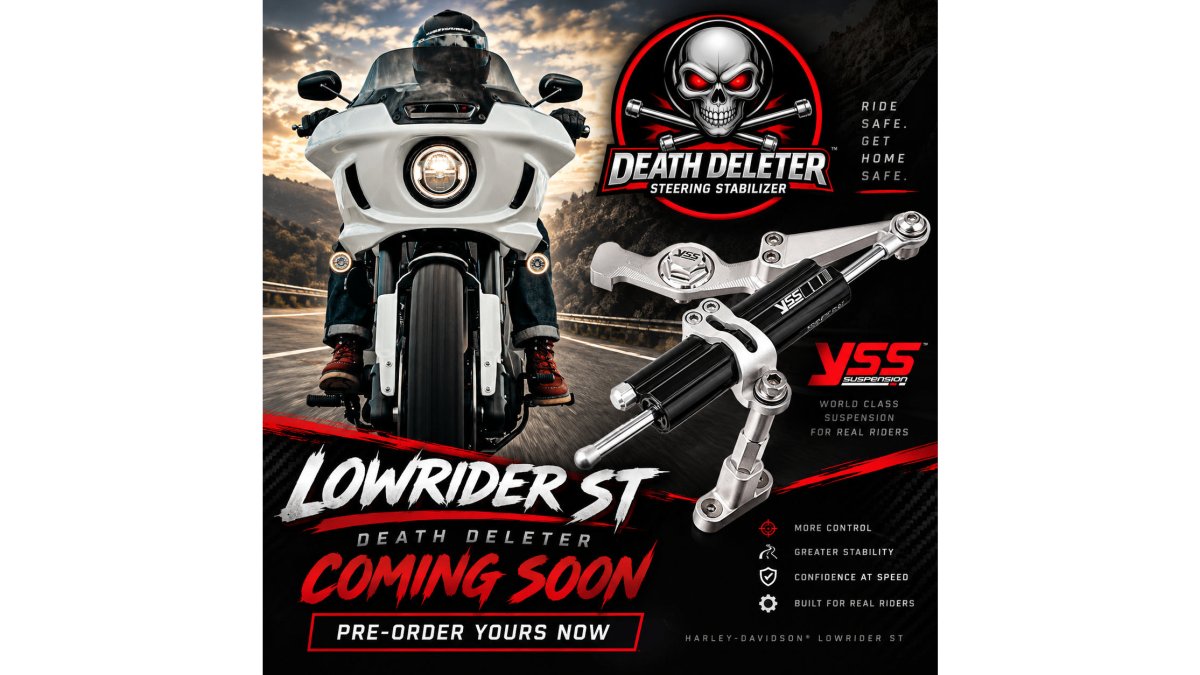
Death Deleter offers steering stabilizer kits for 2015-2026 Road Glide and Street Glide models, and a Low Rider and Softail kit is available for pre-order at $675, with release expected by early December 2026.
Ready to stop guessing about your front end? Death Deleter builds steering stabilizers around the YSS damper for Harley-Davidson touring bikes, with mounting options that match your fork setup. Shop the kit for your model today.
Frequently Asked Questions
What does a motorcycle steering damper do?
A steering damper is a hydraulic cylinder mounted between the frame and the front fork. It resists rapid handlebar movement, which helps control oscillation at speed. It does not steer the bike or change its handling at low speed. The Death Deleter kits for Road Glide and Street Glide models include an adjustable, rebuildable YSS damper priced at $675 per kit, with black, gold, or clear anodized bracket finishes.
Is a steering damper necessary on a Harley-Davidson Road Glide?
It is not required from the factory, but it can help riders who notice head shake or wobble at highway speeds, especially after adding power or running heavier accessories. A damper addresses the steering system only. Tire condition, suspension setup, and wheel alignment also affect stability, so check those first. Death Deleter's Road Glide kit fits 2015 to 2026 models, including CVO inverted fork setups, using included shims for 49 to 62 mm fork sizes.
Can a steering damper protect motorcycle engine components?
No. A steering damper controls handlebar movement and does not reduce engine vibration, stress, or wear. Engine protection comes from maintenance, correct tuning, and proper mounting of the powertrain. Riders should not treat a damper as a substitute for those. Steering damping may make the bike feel more composed, but it does not change engine loads.
What is the difference between a steering damper and a steering stabilizer?
The terms are often used interchangeably in the aftermarket. In practice, a stabilizer usually refers to the complete kit, including brackets and mounts, while the damper is the hydraulic unit itself. When comparing products, check whether the price includes the damper, the mounting hardware, and the fork shims needed for your specific model year and fork type.
