
Last Updated: November 12, 2026
Quick Summary
Failing swingarm bushings usually show up as changes in how the bike rides: wobble or wandering at speed, a vague feel through the rear end, and clunks, creaks, or knocks over bumps and during throttle changes. Side-to-side play at the pivot is a clear sign that the parts need inspection before the next ride.
- Wobble at highway speeds or wandering in corners can signal worn swingarm bushings.
- A clunk over bumps often means play in the bushing or sleeve, while a dry squeak points to missing lubrication.
- Test the pivot with the rear wheel unloaded and the shock disconnected, since loading can hide wear.
- Check tires, wheel bearings and steering components before replacing swingarm bushings.
- Stop riding if you see clear side-to-side play at the pivot and have it inspected.
Table of Contents
- What Swingarm Bushings Do and Why They Wear Out
- Symptoms of Failing Swingarm Bushings While Riding
- Motorcycle Swingarm Bearing Symptoms Compared to Bushing Failure
- How to Check Motorcycle Swingarm Bushings Step by Step
- Motorcycle Rear End Wobble Causes Beyond the Swingarm
- Swingarm Bushing Replacement Cost and What Affects It
- When to Stop Riding and Book a Swingarm Inspection
- Troubleshooting Table: Symptoms and Likely Causes
- Frequently Asked Questions
What Swingarm Bushings Do and Why They Wear Out
Swingarm bushings are the small sleeves that let the swingarm pivot smoothly on the frame. Each bushing sits between a steel shaft and the swingarm pivot, and it takes the constant side loads of cornering and braking. These parts matter a great deal on heavy touring bikes, where the rear end carries a lot of weight at speed.
Over time, the bushing wears. Dirt, water and road grit work into the joint, and friction slowly enlarges the bore. The pivot then starts to move where it should not.
Why do they wear out? A few common causes:
- Lack of lubrication or old grease
- Grit and water getting past the seals
- Hard use, such as aggressive cornering or heavy loads
- Age and mileage alone
Symptoms of Failing Swingarm Bushings While Riding
Worn bushings rarely fail all at once. They show up as changes in how the bike feels. Watch for these signs during normal riding.
Wobble, Wandering, and Vague Handling
A bike with worn pivot parts can feel loose at the rear. You may notice:
- Wobble or instability at highway speeds
- Wandering in corners, with the bike not holding a clean line
- A vague or disconnected feel through the rear end
- Less confidence when braking mid-corner
Some riders confuse this with tire or steering issues. Check the rear end before blaming the front.
Clunks, Creaks, and Unusual Noises
Sound is often the first clue. Listen for:
- A clunk when you go over bumps or grooves in the road
- A creak when the rear suspension moves
- A knock when you roll on or off the throttle
A dry, squeaking pivot usually points to missing lubrication. A deeper clunk often means play in the bushing or the sleeve.
Motorcycle Swingarm Bearing Symptoms Compared to Bushing Failure
The keyword asks about bushings, but many swingarm pivots use bearings, and some use a bushing on one side and a bearing on the other. Treating them as the same part leads to the wrong diagnosis and the wrong repair. Here is how the two fail differently and how to tell them apart.
What each part is:
- Bushing: a plain sleeve, often bronze, steel-backed, or a polymer composite, that rides on a steel shaft or inner sleeve. It relies on a film of grease and a close clearance to work. It fails by wearing the bore larger, which shows up as play rather than roughness.
- Bearing: a rolling element (needle, roller, or ball) set in a cage, running on a hardened inner race or the shaft itself. It fails by pitting, brinelling, or losing lubrication, which shows up as roughness, notchiness, or a gritty feel when rotated.
- Sleeve or inner race: the hardened surface the bushing or bearing runs on. A worn sleeve can mimic a worn bushing, so inspect both.
How the symptoms differ:
- Bushing wear: side-to-side play at the pivot, a looser feel with no roughness when you rotate the arm by hand, and often a clunk over bumps. The pivot may feel smooth but loose.
- Bearing wear: a grainy or notchy feel when you rotate the swingarm slowly, a rumble or vibration that changes with speed, and fretting or rust-colored grease at the seals. The pivot may feel tight but rough.
- Sleeve wear: play that appears only on one side, or a pivot that feels tight when new grease is added and loose again shortly after.
How construction varies by motorcycle: Many street and touring bikes use plain bushings or composite sleeves at the pivot for cost and simplicity, while dirt bikes, sport bikes, and heavy load carriers more often use needle or roller bearings with seals. Some designs combine a bushing at the frame side with a bearing at the linkage. Because of this, the same symptom on two different models can point to different parts, and the service manual for your specific model is the only reliable guide to what is inside the pivot.
How to tell them apart during inspection: With the swingarm unloaded, rotate the arm slowly through its small range of travel and feel for roughness, then push and pull laterally and feel for play. Roughness points to bearings; play points to bushings or sleeves. Then remove the pivot bolt and inspect the bore, the sleeve, and the bearing races directly. Look for an enlarged bore, a worn sleeve, pitting on races, or dried and contaminated grease.
Why this matters for repair: A bushing repair often means replacing the bushing and sleeve and re-greasing, while a bearing repair means replacing the bearing, its seals, and sometimes the shaft. Mixing up the two can lead to replacing the wrong part and leaving the real wear in place.
Watch out: a pivot that feels smooth and tight by hand can still be worn enough to cause high-speed wobble once the suspension is loaded, so judge the part against the service specification rather than by feel alone.
How to Check Motorcycle Swingarm Bushings Step by Step
Grabbing the rear wheel and shaking it mostly loads the wheel bearings, axle, and swingarm-to-frame joint together, so a positive result does not tell you which part is loose. Sag readings can also help you judge rear-end looseness, and you can learn how to measure suspension sag before deciding on a pivot repair.
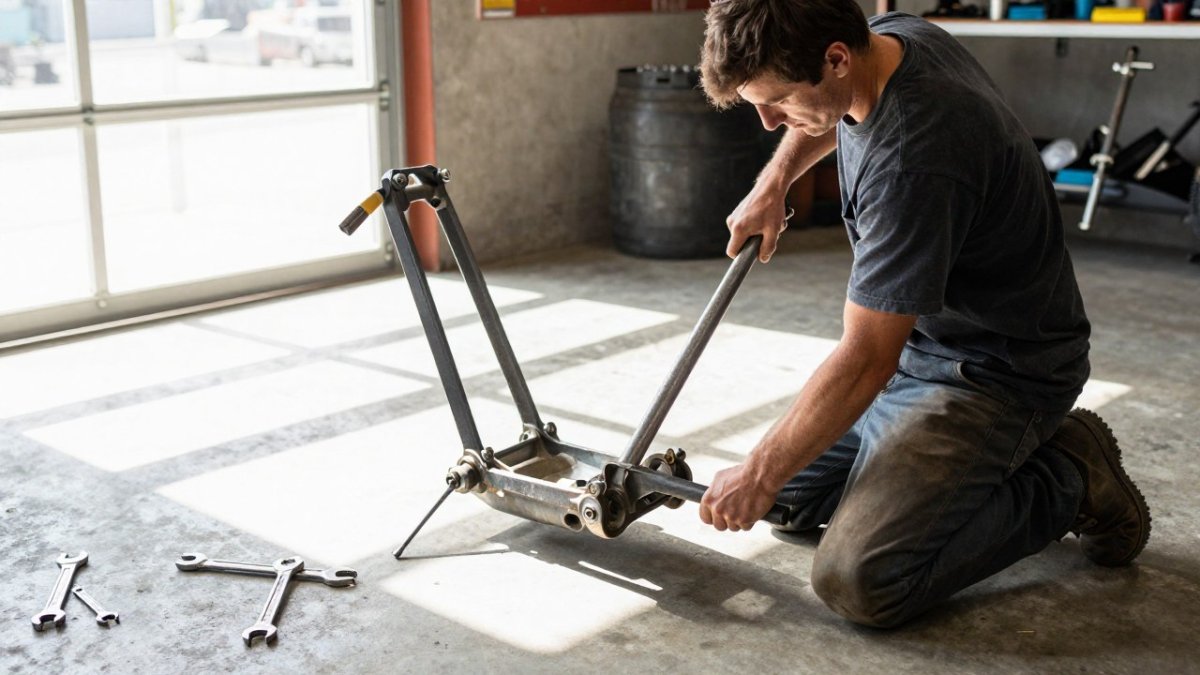
1. Support the motorcycle so the rear wheel hangs free. The swingarm must be unloaded. If the bike rests on its sidestand or the rear tire carries weight, you cannot feel pivot play. Strap or chock the front wheel so the bike cannot roll.
2. Disconnect or unload the rear shock and linkage where the design allows. On many bikes the shock and linkage preload the swingarm even with the wheel off the ground.
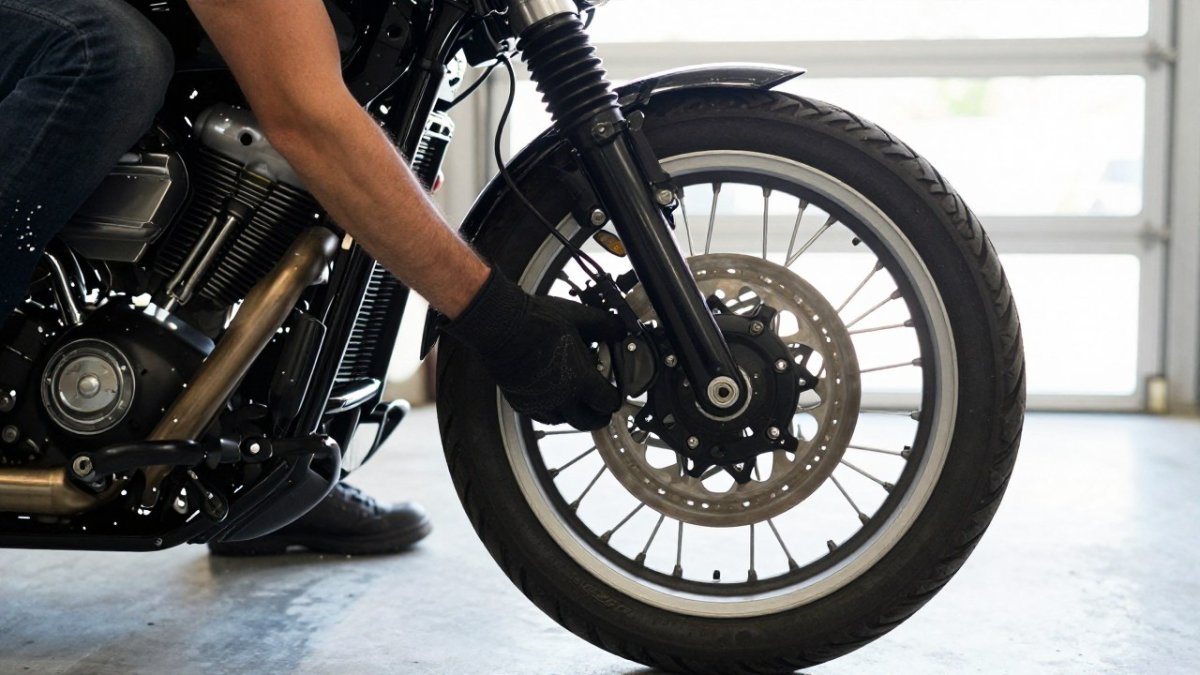
3. Check lateral (side-to-side) play at the swingarm, not the wheel. Grip the swingarm arms near the rear axle and push and pull horizontally, parallel to the axle. Then repeat while holding the rear wheel still with your knee or a block.
4. Check vertical play at the pivot. With the shock unloaded, lift and lower the rear of the swingarm a small amount and watch the pivot area.
5. Check rotational play with the rear brake applied. Apply the rear brake to lock the wheel, then try to rotate the swingarm around the pivot axis by pushing forward and back on the arm.
6. Inspect the pivot hardware and seals. Look for a loose pivot bolt or nut, missing or cracked seals, grease weeping out, rust streaks, and dirt packed around the joint.
7. Compare against a known-good example if you can. Feel a friend's or dealer's comparable bike the same way. A small amount of designed-in compliance is normal; a distinct tick or a visible gap is not.
How to read the results:
- No movement, dry or squeaking pivot: clean, inspect the seals, and re-grease per the service manual.
- Small lateral tick with the shock unloaded: suspect bushing or sleeve wear; plan an inspection and replacement.
- Visible side-to-side movement at the pivot: stop riding and have the pivot rebuilt before the next ride.
- Movement at the wheel but not the swingarm: focus on wheel bearings, axle torque, and the wheel itself.
- Movement at the swingarm but not the pivot: check the shock, linkage bearings, and frame mounts.
Watch out: testing pivot play with the rear wheel on the ground or with the shock still loaded can hide real wear, and a bike that feels tight in the garage can still wobble at speed once the suspension is working.
If you are not comfortable unloading the shock or reading the results, a qualified technician can perform the same check and measure the pivot against the service specification.
Motorcycle Rear End Wobble Causes Beyond the Swingarm
Not every rear-end complaint comes from the swingarm. Other parts can cause similar symptoms:
- Tire wear, incorrect pressure, or a bent wheel
- Wheel bearing play
- Steering head bearings or a loose steering damper
- Rear shock wear or incorrect settings
- Loose axle or caliper mounting
Check these before replacing swingarm bushings. A structured diagnosis saves time and money.
Swingarm Bushing Replacement Cost and What Affects It
Replacement cost depends on your model, the parts needed, and whether a shop does the labor. Pricing varies widely, so request a written quote from a qualified shop. Current parts and labor rates should come from your dealer or independent mechanic.
Factors that change the total include:
- Bike model and swingarm design
- Whether bearings, seals or sleeves also need replacing
- Shop labor rates in your area
- Whether the swingarm must come off the frame
When to Stop Riding and Book a Swingarm Inspection
Stop riding and have the bike inspected if you notice any of these:
- Wobble at speed that does not go away
- Clear side-to-side play at the pivot
- Loud clunks that come with handling changes
- A rear end that feels unpredictable in corners
Safety comes first. A loose pivot can lead to a sudden loss of control. Have a qualified technician check the bushings, bearings and related parts before you ride again.
Watch out: riding with suspected pivot play can turn a small repair into a crash, so do not test a questionable bike at speed.
If the rear end feels loose, get it checked first.
Troubleshooting Table: Symptoms and Likely Causes
| Symptom | Likely Cause | Next Step |
|---|---|---|
| Side-to-side play at pivot | Worn bushing or bearing | Inspect and replace worn parts |
| Clunk over bumps | Pivot looseness or loose bolts | Check torque and play |
| Creak when suspension moves | Dry or worn pivot | Clean and lubricate, then recheck |
| Wobble at speed | Tires, wheel bearings, or pivot play | Check tires and bearings first |
| Vague corner handling | Pivot play or steering components | Full chassis inspection |
Frequently Asked Questions
How do I know if my swingarm bushings are bad?
The most common signs are rear-end wobble at speed, vague or wandering handling in corners, clunks over bumps, and creaking from the rear of the bike. Check for side-to-side play by grabbing the rear wheel with the bike supported and the transmission in neutral. Noticeable movement, or movement that feels like it comes from the pivot rather than the wheel bearings, points to worn bushings or bearings. Confirm with a visual check of the sleeves and rubber for cracks, flattening, or distortion before deciding on repair.
Can bad swingarm bushings cause rear-wheel wobble?
Yes. When the bushings or bearings in the swingarm pivot wear, the swingarm can move independently of the frame. That extra movement lets the rear wheel shift and can make the bike feel unstable, especially at highway speed or when riding hard through corners. Wobble can also come from tire problems, wheel bearings, steering head bearings, or suspension faults, so isolate the swingarm before assuming it is the cause.
How often should motorcycle swingarm bushings or bearings be replaced?
There is no fixed mileage for every model because wear depends on riding style, road conditions, maintenance, and whether the bike is used for hard riding or track days. Inspect the pivot every service interval and whenever you notice new handling or noise symptoms. Replace bushings or bearings once they show measurable play, damage, or deformation, rather than waiting for a set number of miles.
Can I ride a motorcycle with bad swingarm bushings?
It is not advisable. Worn bushings can allow the rear end to move unpredictably, which is most dangerous under hard braking, in fast corners, and at highway speeds. If you notice pronounced play, wobble, or instability, reduce speed, avoid aggressive riding, and have the bike inspected before riding further. Get the swingarm checked by a qualified technician as soon as possible.
