
Table of Contents
- Why Chain Tensioner Selection Matters for Performance Harley Riders
- Cam-Chain Tensioners vs. Primary-Chain Tensioners: What You Need to Know
- Harley Primary Chain Tensioner Options for Modified Engines
- Harley Cam Chain Tensioner Conversion Kit Considerations
- Automatic Motorcycle Chain Tensioner vs. Manual Adjustment
- Harley Chain Tensioner Adjustment and Installation Best Practices
- Performance-Build Recommendations: Choosing by Engine Modification
- Inspection, Wear Signs, and Replacement Timing
- Frequently Asked Questions
Last Updated: October 12, 2026
Why Chain Tensioner Selection Matters for Performance Harley Riders
When you upgrade your Harley's engine, every downstream component works harder.
A loose chain can slip, derail, or fail entirely, at speed, that's a safety issue.
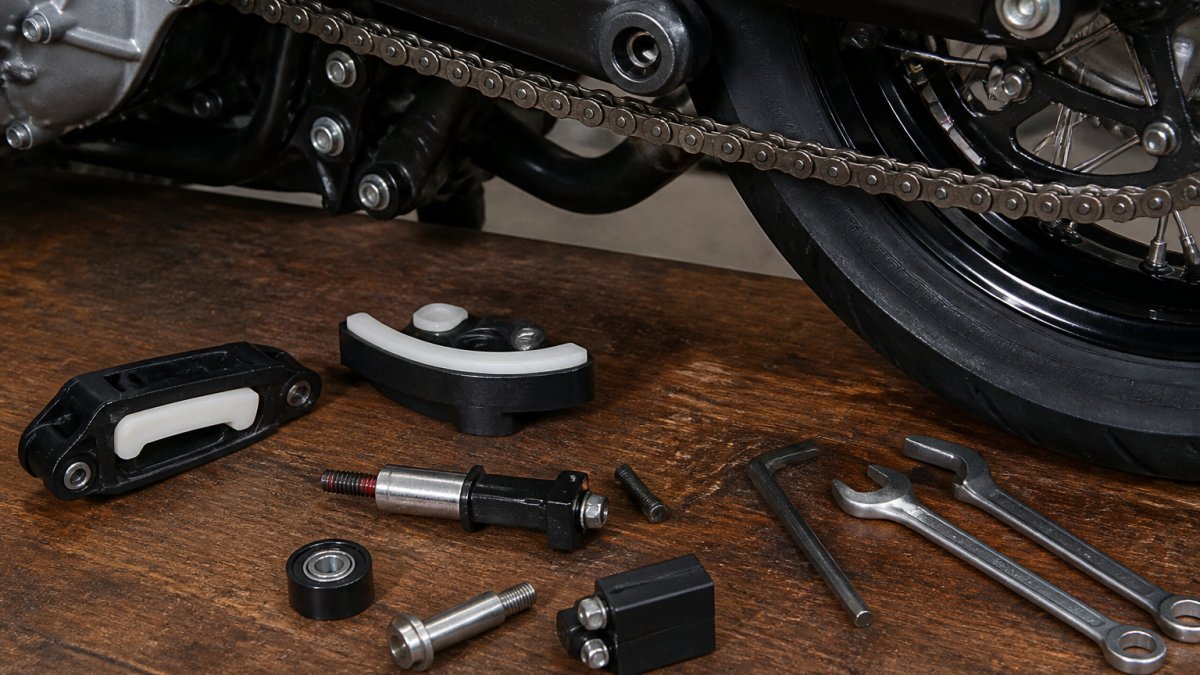
Death Deleter engineers spring-loaded chain tensioners for performance Harley-Davidson touring bikes. Ours maintains pressure automatically as slack develops, so you don't manually adjust every few hundred miles.

Below: the types of tensioners available, how to match one to your build, and what to watch for during installation and inspection.
Cam-Chain Tensioners vs. Primary-Chain Tensioners: What You Need to Know
These are two different systems requiring different solutions. Riders confuse them because both sit on the engine, but they control different chains.
How Cam-Chain Tensioners Work
The cam-chain drives the camshaft, a smaller, faster-moving chain that controls valve timing.
Hydraulic cam-chain tensioners use oil pressure to apply tension automatically. They're common on stock engines because they require no manual adjustment. Spring-loaded versions apply constant pressure through a mechanical spring.
The key difference: cam-chain tension affects how precisely your valves open and close. Loose tension throws off valve timing and reduces power; tight tension loads the chain and shortens its life.
How Primary-Chain Tensioners Work
The primary chain connects the crankshaft to the clutch. It's larger and slower than the cam-chain but transmits all engine power to the drivetrain. A loose primary chain will clatter, slip, and eventually fail.
Primary-chain tensioners press against the chain to maintain consistent tension.
For modified engines producing more power, a spring-loaded primary-chain tensioner handles increased load without manual adjustment.
Harley Primary Chain Tensioner Options for Modified Engines
If you've added horsepower to your Harley, your primary chain is working harder.
The Death Deleter Harley-Davidson Touring Chain Tensioner is purpose-built for this scenario. It fits all Harley-Davidson touring models from 2015 and newer, in Gold, Black, or Clear Anodized finishes.
The spring-loaded design means no manual adjustment: as your chain stretches, on street or track, it maintains pressure automatically, preventing the clatter and slip loose chains create.
At $399, it's a meaningful investment, but far cheaper than a chain failure at highway speed or the damage a derailed chain can do to your engine cases.
Harley Cam Chain Tensioner Conversion Kit Considerations
A cam-chain conversion kit replaces the factory hydraulic cam-chain tensioner with a spring-loaded or mechanically adjusted unit, changing how cam-chain tension is managed for the life of the engine. Most riders never need one. Those who do fall into three groups: high-lift cam builds where valve-timing precision matters, engines with a history of hydraulic tensioner failure, and builders who want to eliminate oil-pressure dependency in the cam chest.
What a Conversion Kit Actually Includes
A typical kit is not a single part. Expect the following, though contents vary:
- A spring-loaded or ratcheting tensioner body
- A tensioner shoe or pad that contacts the chain
- Mounting hardware (bolts, spacers, sometimes a new backing plate)
Some kits include upgraded inner cam bearings or a new cam support plate. If gaskets aren't included, budget separately, reusing old cam-cover gaskets is a common source of oil leaks after a conversion.
Fitment by Engine Family and Model Year
Fitment is where most conversion-kit purchases go wrong. Engine families on modern touring bikes behave differently:
| Engine family | Typical model years | Cam-chain tensioner type | Conversion-kit notes |
|---|---|---|---|
| Twin Cam 88 (TC88) | 1999-2006 | Spring-loaded, with a known wear-prone shoe | Early kits often replace the shoe and add a hydraulic upgrade; full spring-loaded conversions exist but are less common |
| Twin Cam 96/103 | 2007-2016 | Hydraulic | Most conversion kits target this range; verify cam support plate style, as it changed across these years |
| Milwaukee-Eight | 2017-present | Hydraulic | Fewer conversion kits on the market; most riders stay with the factory hydraulic system unless running an aggressive cam |
This table is a starting point, not a guarantee. Within a single model year, Harley-Davidson used more than one cam support plate design, and aftermarket kits are often built around a specific plate. Before ordering, confirm your engine family, cam support plate part number, and whether your bike has been modified in the cam chest. A kit listed for a 2015 Road Glide may not fit a 2018 Street Glide even though both are Twin Cam 103s, because the plate and cover changed.
If you cannot confirm your cam support plate part number, do not order a conversion kit. Call the manufacturer with your VIN and engine code. A wrong-plate kit can leave you with a cam chest that will not seal, and returning an opened kit is often not an option.
Installation Complexity and Tools
A cam-chain conversion is a cam-chest job, not a bolt-on. Plan for:
- Time: 4 to 8 hours for a competent home mechanic, longer if you are also replacing cams or bearings.
- Tools: Torque wrenches in the inch-pound and foot-pound ranges, a cam-locking tool or equivalent, a bearing puller/installer if you are changing inner cam bearings, and a service manual for your specific model.
- Fluids and consumables: New engine oil, new gaskets, thread sealant, and assembly lube.
If you're not comfortable removing the cam cover, locking the cams, and re-timing the engine, this is a shop job. Labor at an independent Harley shop commonly runs several hours at the posted rate, which can exceed the cost of the kit itself.
Total Ownership Cost, Not Just Kit Price
The kit price is the smallest number in the equation. A realistic budget includes:
- The conversion kit itself
- Gaskets and seals if not included
- New engine oil and filter
- Inner cam bearings, if you choose to replace them while the cam chest is open
- Labor, if you are not doing the work yourself
- Follow-up inspection after the first few hundred miles to confirm no leaks and correct tension
For riders who only need a primary-chain upgrade, a conversion kit is overkill. For those chasing valve-timing precision on a high-lift cam build, it's the correct tool. Decide based on your build, not the marketing copy.
When a Conversion Kit Is the Wrong Choice
Skip the conversion kit if:
- Your engine is stock or lightly modified and the factory hydraulic tensioner is working correctly
- You are not prepared to open the cam chest and re-time the engine
- You cannot verify fitment for your specific cam support plate
If any of those apply, a spring-loaded primary-chain tensioner is the better first upgrade.
Automatic Motorcycle Chain Tensioner vs. Manual Adjustment
The core difference between automatic and manual tensioners is convenience and consistency.
Death Deleter Harley-Davidson Touring Chain Tensioner →
An automatic motorcycle chain tensioner (spring-loaded or hydraulic) maintains tension without rider intervention.
Manual adjustment means periodically loosening the rear wheel, adjusting chain slack, and retightening everything.
For most performance Harley riders, automatic is the better choice. You're not constantly monitoring chain wear, and you don't risk riding with improper tension because you forgot to adjust.
Harley Chain Tensioner Adjustment and Installation Best Practices
Installation quality matters. A poorly installed tensioner won't protect your chain and can damage surrounding components.
Start by selecting the right mounting location.
Verify fitment before installing.
Torque all fasteners to spec. Under-torqued bolts can loosen from vibration; over-torqued bolts can strip threads or crack mounting tabs.
After installation, run the engine and listen. A properly tensioned chain runs quietly; clatter or grinding means the tensioner may not be applying enough pressure, or the chain itself may be worn.
Performance-Build Recommendations: Choosing by Engine Modification
Most tensioner advice online is a product listing with marketing attached. What riders need is a decision framework: match the tensioner to the build, understand the trade-off, and know what to inspect and when. The table below organizes recommendations by build tier and riding use; the sections that follow explain the trade-offs.
Recommendation Matrix by Build and Use
| Build tier | Typical modifications | Primary-chain tensioner | Cam-chain tensioner | Inspection interval |
|---|---|---|---|---|
| Stock or near-stock | Intake, exhaust, tune | Factory or stock-compatible spring-loaded unit | Factory hydraulic | Annually or at each oil service |
| Mild street build | Cams, head work, tune | Spring-loaded aftermarket unit rated for increased load | Factory hydraulic, unless cam lift is aggressive | Every 5,000-7,500 miles |
| Big bore / high-output street | Big bore kit, ported heads, throttle body, tune | Spring-loaded aftermarket unit; verify load rating | Spring-loaded conversion kit worth considering | Every 3,000-5,000 miles |
| Track or race-level | Full engine build, high-lift cams, sustained high RPM | Spring-loaded aftermarket unit; inspect before and after each event | Spring-loaded conversion kit strongly recommended | Before and after each track session |
| Mixed street and track | Moderate engine work, occasional track days | Spring-loaded aftermarket unit | Factory hydraulic unless symptoms appear | Before each track day, plus annual service |
Trade-Offs Behind Each Tier
Stock and near-stock builds. The factory tensioner is adequate.
Mild street builds. This is where a spring-loaded primary-chain tensioner starts paying for itself.
Big bore and high-output street builds. Both chains work harder.
Track and race-level builds. Sustained high RPM and repeated heat cycles accelerate wear on every tensioner component.
Mixed street and track use. Start with the primary chain.
Matching the Tensioner to the Failure Mode You Are Trying to Prevent
Different builds fail differently, and the tensioner you choose should target the failure you're most likely to see:
- Primary-chain clatter and slip at idle or under load: spring-loaded primary-chain tensioner
- Cam-chain rattle at startup that fades as oil pressure builds: often a hydraulic tensioner symptom; inspect before replacing
- Valve-timing drift on a high-lift cam build: cam-chain conversion kit worth evaluating
A Note on Cost Framing
Comparing tensioners on sticker price alone is misleading. A cheaper unit requiring manual adjustment every few hundred miles costs time and risks being run out of spec. A spring-loaded unit costs more up front and less over its service life. Compare total ownership: purchase price, installation labor or time, inspection frequency, and expected replacement interval. That's the number that matters for a performance build.
Pick the tensioner that matches your build tier and the failure mode you are trying to prevent. For most performance Harley riders, that means a spring-loaded primary-chain tensioner first, and a cam-chain conversion kit only when the build or the symptoms justify it.
Inspection, Wear Signs, and Replacement Timing
Chain tensioners don't last forever. Wear indicators tell you when to replace yours.
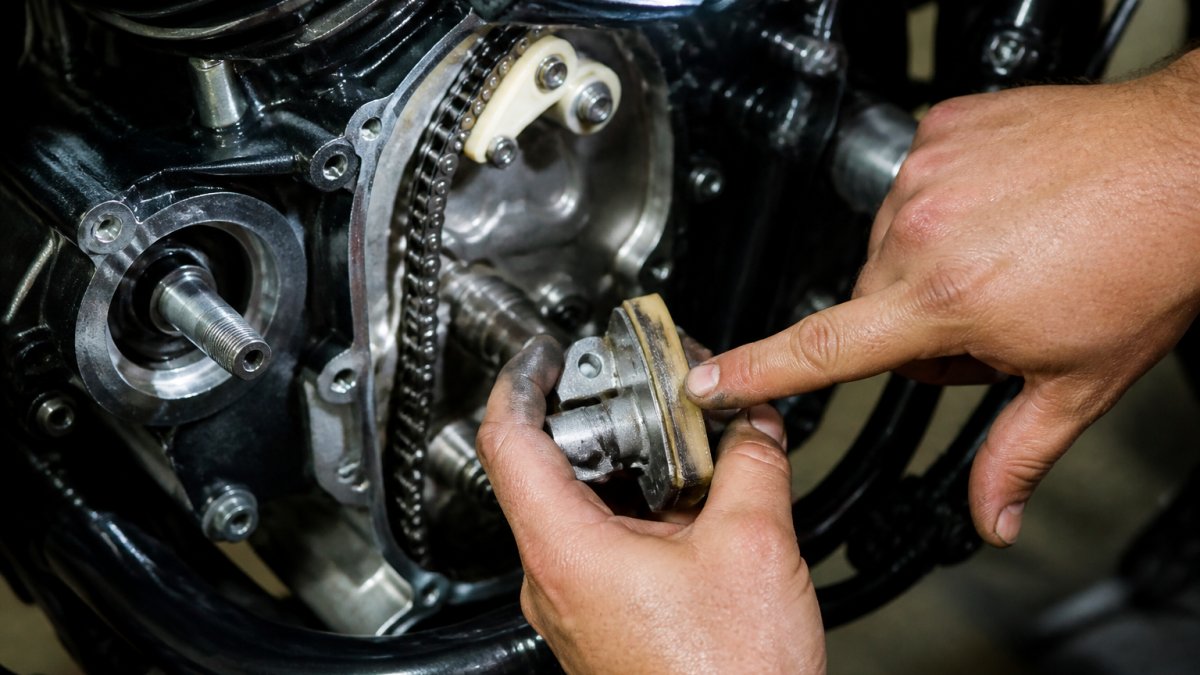
Check your tensioner every time you service your chain. Look at the tensioner shoe, the part that contacts the chain.
Listen for changes in chain noise.
Spring-loaded tensioners can lose tension over time.
For regular riders, inspect your tensioner at least annually.
Replacement is straightforward for most aftermarket tensioners: remove the old unit, clean the mounting surface, and bolt in the new one.
Choosing the right chain tensioner for performance harley means understanding what your engine modification demands and matching a tensioner rated for that load. Whether you're running a mildly modified engine or pushing serious horsepower, the right tensioner protects your investment and keeps you in control. Shop Death Deleter chain tensioners and get the stability and reliability your performance build deserves.
Frequently Asked Questions
What is the difference between a cam chain tensioner and a primary chain tensioner?
A cam-chain tensioner maintains tension on the chain that drives your engine's camshaft, while a primary-chain tensioner controls the chain connecting your crankshaft to the clutch basket. Cam-chain tensioners are hydraulic or spring-loaded and sit inside the engine. Primary-chain tensioners mount externally on your bike's frame and use spring pressure or automatic adjustment to keep the primary chain tight. For performance builds, both matter, but primary-chain tensioners are more accessible for upgrades.
Are automatic motorcycle chain tensioners better than manual tensioners for a Harley?
Automatic chain tensioners maintain consistent pressure as your chain stretches during use, requiring no manual adjustment. For performance riding, automatic tensioners are superior because they adapt to changing chain slack without rider intervention. Spring-loaded automatic tensioners like the Death Deleter Harley-Davidson Touring Chain Tensioner apply continuous pressure via a roller wheel, keeping your chain under tension during acceleration, cornering, and high-speed runs. Manual adjustment works for casual riders but demands frequent attention on a modified, high-output engine.
Do I need to upgrade my chain tensioner if I've added horsepower to my Harley?
Yes. Big bore kits, tuning, and performance cams increase engine stress and accelerate chain stretch. Stock tensioners are calibrated for factory power delivery and may not maintain adequate tension under the higher loads of a modified engine. Upgrading to a spring-loaded tensioner designed for your specific model ensures proper chain control, reduces derailment risk, and maintains driveline stability, critical for high-speed riding and track use.
What fitment should I verify before buying a chain tensioner for my touring Harley?
Confirm your model year. The Death Deleter Harley-Davidson Touring Chain Tensioner fits all touring models from 2015 and newer. Check that your bike's frame geometry and chain configuration match the tensioner's design. Verify mounting points and roller wheel clearance. If your bike has been heavily modified, inspect for interference with custom parts. Always review the manufacturer's fitment guide and installation instructions before purchase.